Is Almond Butter a Healthy Fat? The Complete Nutrition Guide
When it comes to almond butter, many people find themselves standing there confused, wondering if it is a part of a nutritious diet or a guilty pleasure cheat list. Almond butter has been increasingly popular for the past couple of years and can now be seen incorporated in various foods such as energy balls, smoothies, toast, and even eaten directly from the jar. However, due to its high calorie content and fat content, many people hesitate to include it in their diet. So, Is almond butter a healthy fat? Yes, almond butter does contain high amounts of monounsaturated fats, which are the same kind of fats found in olive oil and avocados. In addition, almond butter also contains fiber, protein, vitamins E, and magnesium.
In this article, you’ll learn about the different types of fats found in almond butter, its comparison with other nut butters such as peanut butter, how much of it can and should be consumed, and the people who might need to limit or avoid it.
What is Almond Butter Made Of?
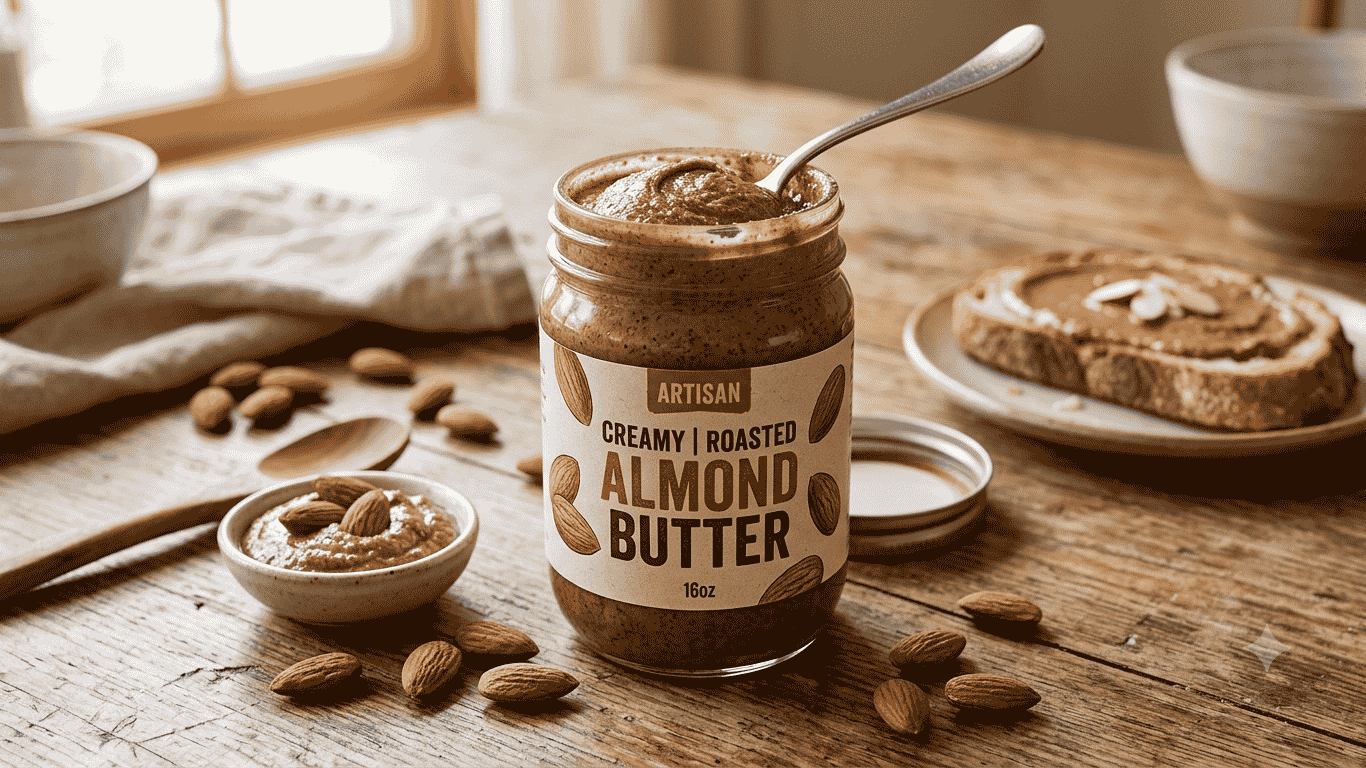
Almond butter is generally made by roasting almonds into a smooth paste. The almond butter that is sold in stores mostly contains only two ingredients: almonds and a pinch of salt. Unlike some processed spreads, it typically skips added sugar, hydrogenated oils, and artificial preservatives—which is a big reason it’s considered a whole-food source of fat.
Almond Butter Vs. Peanut Butter: A Nutritional Comparison
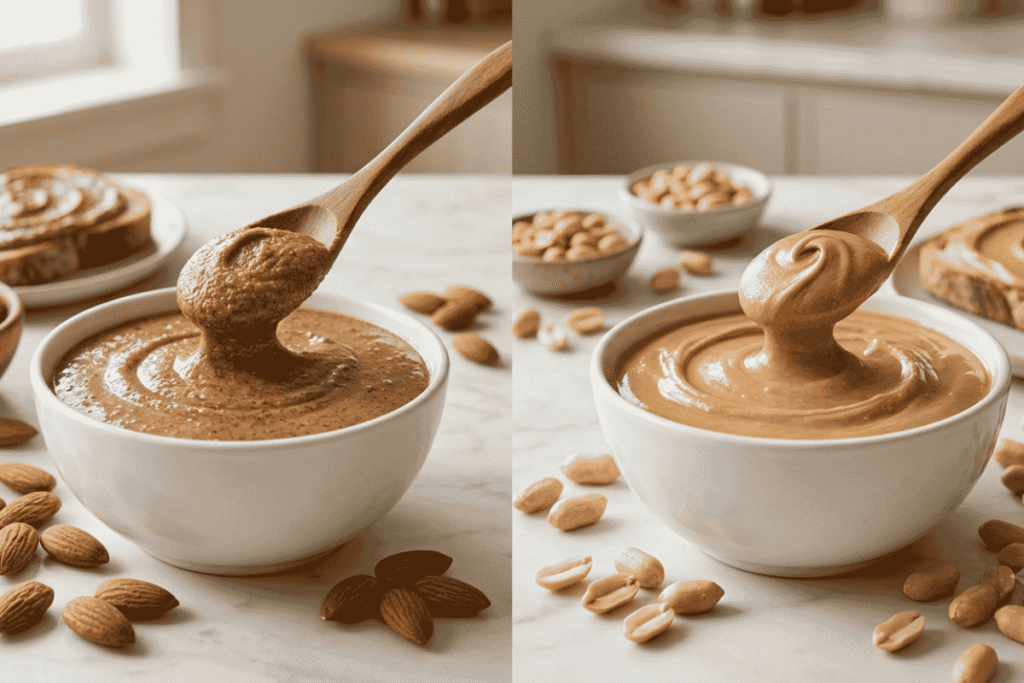
Many people wonder how almond butter holds its ground when compared to peanut butter. Here is a side-by-side comparison based on 2 tbsp servings:
| Nutrients | Almond Butter | Peanut butter |
| Calories | 196 | 188 |
| Total Fats | 18g | 16g |
| Monounsaturated fats | 11g | 7.7g |
| Saturated Fats | 1.4g | 3g |
| Protein | 6.7g | 8g |
| Fiber | 3.3g | 2g |
| Vitamin E | 45% DV | 21% DV |
| Magnesium | 22% DV | 13% DV |
| Clacium | 7% DV | 1% DV |
Almond butter tends to have an upper hand over peanuts when it comes to monounsaturated fats, fiber, vitamin E, magnesium, and calcium content, while peanut butter offers slightly more protein per serving. Both choices are healthy, but if you’re prioritizing heart health, almond butter has more nutritional advantages.
How much Almond Butter should You eat?
Because almond butter is calorie-dense, portion control matters even though the fat itself is healthy.
Expert Recommendation:
One should consume 1-2 tbsp of almond butter as part of a balanced meal. Pairing it with fruits, breads, or oats. One should choose those brands of almond butter that do not contain any sugar.
Health benefits of Almond Butters’ healthy fats
Support Heart Health
Almond butter contains monounsaturated fats that can help in lowering LDL cholesterol while maintaining HDL (good) cholesterol, supporting overall cardiovascular health.
Promotes Satiety and Weight Management
Despite being nutrient-dense, the combination of fiber, healthy fats, and protein in almond butter helps slow digestion and promote satiety, which helps in weight management.
Stabilize Glucose Level
Almond butter has a low glycemic index; combining it with carbohydrates like apple slices or whole grain toast will maintain your blood glucose level.
Provide Protection
Almond butter, high in Vitamin E, acts as an antioxidant that protects cells from oxidative stress. and support immune function.
Provide Muscle and bone support
Magnesium and calcium in almond butter contribute to bone density, muscle function, and nerve signaling.
Who Should Be Cautious With Almond Butter?
Though almond butter is good for health in general, there are certain individuals who have to be cautious:
- Individuals suffering from a tree nut allergy should avoid almond butter entirely
- Those paying close attention to their caloric consumption will have to watch out for portion sizes due to the high caloric density of this spread.
- People with kidney problems might have to be careful about their magnesium and phosphorus intake levels.
Simple Ways to Add Almond Butter To Your Diet
- Spread almond butter on whole grain toast with banana slices.
- Blend into your smoothies for healthy fats and creaminess
- Add into yoghurt or oatmeal
- Whisk into salad dressing or stir-fry sauces
Conclusion
Is almond butter a healthy fat? The evidence says yes. Because of its high content of monounsaturated fats, minimal saturated fats, and nutrients that include fiber, magnesium, calcium, and vitamin E, almond butter is a nutritious addition to a balanced diet. Like any calorie-dense food, it should be consumed in moderate amounts; experts recommend 1-2 tbsp per day. It supports heart health, weight management, and maintaining blood glucose levels. Whether you spread it on toast or blend it into a smoothie, almond butter is a smart, satisfying way to add healthy fats to your daily diet.